
Baggage Claims & Compensation Explained: Your Rights, Limits, and How to File Correctly
Quick Answer
If your baggage is delayed, damaged, or lost, airlines are legally liable under international conventions and national laws. On most international flights, compensation is capped at approximately 1,288 Special Drawing Rights (SDR) per passenger — roughly €1,600–€1,700 or $1,700–$1,900 USD depending on exchange rates. Domestic limits vary by country.
- Key takeaway: File your report immediately at the airport before leaving.
- Key takeaway: Keep receipts and document damage with photos.
Definitions
Compensation Limits: How Much Can You Claim?
International Flights (Montreal Convention)
For most international routes, airline liability is capped at 1,288 SDR per passenger. The value fluctuates based on exchange rates. Roughly:
This applies whether baggage is delayed, damaged, or permanently lost.
Domestic Flights
Compensation limits differ by country. For example:
- United States domestic flights: DOT liability rules apply.
- EU domestic flights: typically still covered under Montreal Convention.
- Other countries: national aviation regulations apply.
Always verify your airline’s official baggage liability page for precise limits.
Step-by-Step: How to File a Baggage Claim Correctly
Step 1: Report at the Airport Immediately
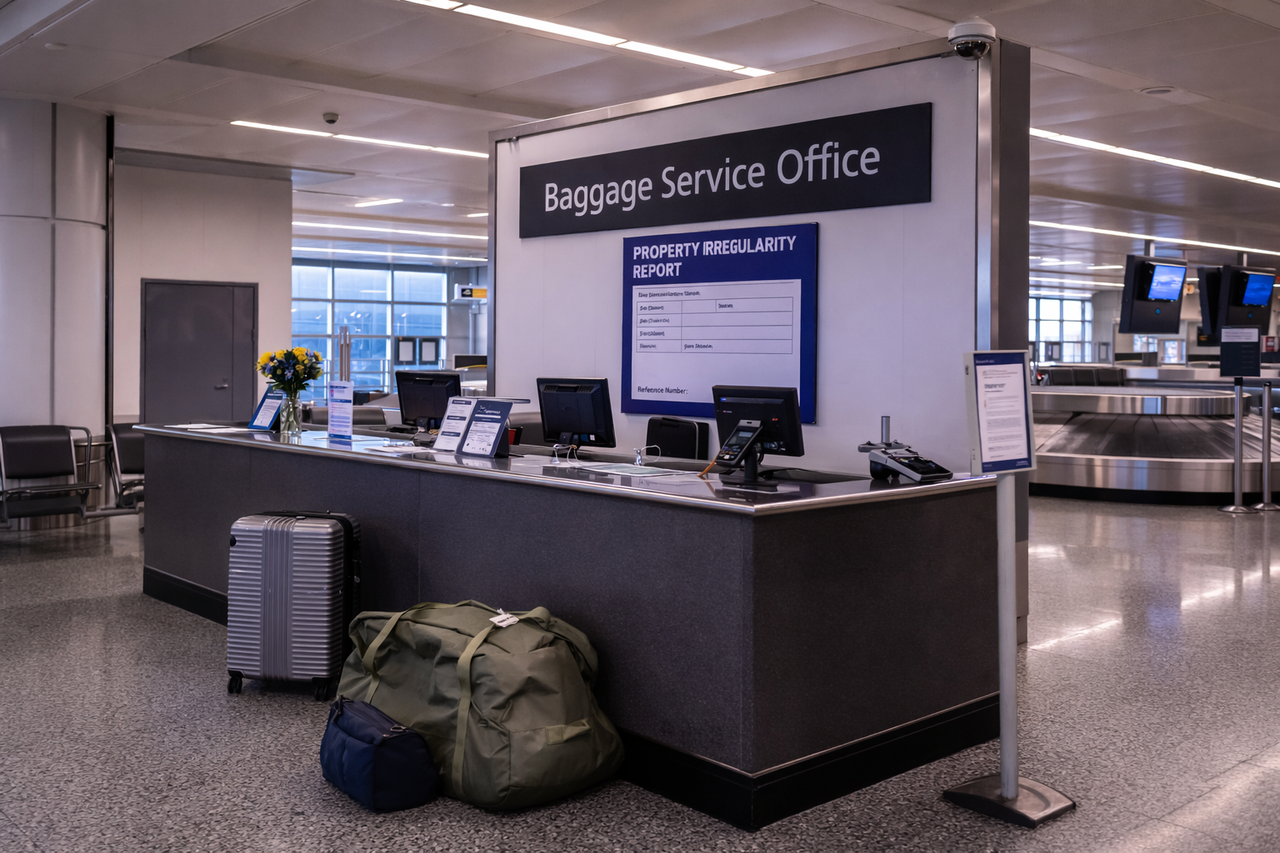
Before leaving baggage claim, visit the airline’s baggage desk and complete a PIR (Property Irregularity Report). Without this report, claims often fail.
Step 2: Document Everything
- Photograph damage immediately
- Keep baggage tag receipt
- Save boarding pass
- Retain purchase receipts
Step 3: Respect Deadlines
Deadlines vary slightly by airline and jurisdiction — always confirm.
Step 4: Submit Supporting Documents
Include:
- PIR reference number
- Photos of damage
- Proof of purchase for essential items
- Bank details for reimbursement
Delayed vs Lost vs Damaged: What You’re Entitled To
Delayed Baggage
You may claim reimbursement for reasonable essential purchases. Luxury items are often rejected. Think practical: clothing, toiletries, basic shoes.
Lost Baggage
If not found after ~21 days, it’s considered permanently lost. Compensation is based on documented value — up to the SDR cap.
Damaged Baggage
Airlines may:
- Repair the bag
- Replace it with equivalent value
- Offer partial compensation
What Airlines Don’t Cover
- Fragile items not properly packed
- Electronics placed in checked baggage (often excluded)
- Cash or jewelry in checked bags
- Normal wear and tear
For high-value items, consider declaring value at check-in (additional fee applies).
How to Reduce Risk Before Flying
Use a Luggage Tracker
Bluetooth tracking tags can significantly increase recovery speed. Popular EU options include:
Smart Tag Option: GYNGUCI Bluetooth Luggage Tracker — affordable tracking solution.
Premium Option: CYBERDOT Smart Tracker — enhanced tracking precision.
Place trackers inside the bag, not outside.
Use Durable Luggage
Hard-shell suitcases (polycarbonate) tend to resist damage better than soft fabric models. Reinforced corners and smooth spinner wheels reduce impact breakage.
Photograph Your Packed Bag
Take a quick photo before check-in. It helps prove condition and contents if disputes arise.
Common Mistakes That Reduce Your Payout
- Leaving airport without filing PIR
- Missing submission deadlines
- No receipts for purchases
- Claiming non-essential luxury items
- Inflating item values without proof
FAQ
How long before baggage is considered lost?
Typically 21 days after delay under Montreal Convention rules.
Can airlines deny compensation?
Yes, if deadlines are missed or documentation is insufficient.
Are electronics covered?
Often excluded from checked baggage liability unless properly declared.
Can I claim both airline and travel insurance?
Yes, but you must disclose any airline compensation received.
What if I connect through another airline?
The final operating carrier is usually responsible, but codeshare rules can complicate claims.
Update Note
Last reviewed and updated: 2026-02-13